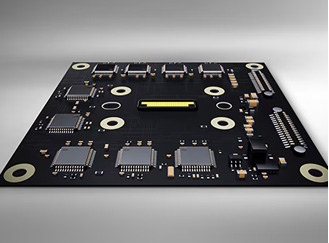
Many people often hear about electronic components but may not fully understand their definition and role, easily mixing them up with circuit boards or finished devices. In fact, electronic components are the basic building blocks that form all electronic systems, and they are indispensable functional units in circuits.
Simply put, an electronic component is an independent electronic device or part with fixed electrical characteristics, which cannot be further divided into smaller electronic units under normal usage. Unlike bare PCBs, which only provide wiring and connection carriers, electronic components have specific electrical functions such as conducting current, storing charges, resisting current, amplifying signals, switching circuits, and processing data. Common types include resistors, capacitors, inductors, diodes, transistors, integrated circuits (chips), connectors, sensors, and oscillators. Each type of component performs a unique function in the circuit, and these components cannot realize complete electronic functions alone but must work together through circuit connections.
Electronic components can be classified in various ways according to their structure and characteristics. Passive components, such as resistors, capacitors, and inductors, do not require an external power supply to achieve their functions and only consume or store electrical energy. Active components, represented by chips, transistors, and sensors, need external power to operate and can amplify, convert, or control electrical signals. Discrete components are independent individual devices, while integrated circuits integrate millions or even billions of components into a tiny semiconductor chip, greatly improving integration and performance.
The performance, accuracy, and reliability of electronic components directly determine the quality of the entire electronic product. From household appliances, smartphones, and automotive electronics to industrial equipment, medical devices, and aerospace systems, all rely on high-performance electronic components. With the development of intelligence, miniaturization, and high frequency in the electronics industry, electronic components are also continuously evolving toward smaller size, lower power consumption, higher frequency, and higher integration, supporting the iterative upgrading of various electronic products.
In summary, electronic components are the most basic functional units in electronic manufacturing. They are the "cells" that constitute PCBA and the core foundation for electronic devices to realize signal transmission, energy conversion, data processing, and intelligent control. Without high-quality electronic components, there would be no stable and reliable electronic products, making them the cornerstone of the modern electronics industry.